Checked on 15 September 2026. The timelines below are not an immigration agent's sales promise. They combine official estimates with the practical cases I could verify.
Australia has parent reunification visas. But the current estimated wait is about 33 years for a standard Parent or Aged Parent visa and about 15 years for the more expensive Contributory Parent visa.
Australia's Department of Home Affairs says the standard parent queue has reached only 2014 applications, and the contributory queue November 2018. From July 2024 to March 2026, 1,536 applicants died before receiving a decision, according to The Guardian, citing department data.
That story made me look for places where parent reunification works in practice: an adult child gets local residence, applies for their parents and, in a normal case, finishes in months rather than decades.
I checked official rules and evidence on actual processing. This is not a world ranking, but three strong options worth investigating: Brazil, Mexico and Argentina.
Short answer. Parents qualify under the family routes in all three countries, and a sensible planning horizon is under two years. Brazil has the strongest evidence: the Federal Police calls 180 calendar days the average estimated time for a correctly filed case. Mexican cases range from weeks to eight months. Argentina's consular stage may take days or weeks, but I found no national statistics for the full route to the residence card. So "under two years" is a reasonable buffer for a straightforward case, not a guarantee.
First, what does "in practice" mean?
An official processing time and the real wait are not the same thing. An immigration process can have several separate clocks:
- waiting for an appointment;
- the application review;
- a consular interview;
- entry into the country;
- exchanging a visa or protocol for a residence card.
Authorities often publish the deadline for only one stage. I separate three types of evidence:
- an official statutory deadline - how long one stage should take;
- an official average estimate - how long the authority says the service usually takes;
- practical cases - applicants' reports and current instructions from individual offices.
A handful of cases is not government statistics, but it can expose delays hidden behind the neat official number.
This article's clock starts once the adult child has qualifying status and the documents are ready. Years spent reaching that status or citizenship are a different timeline. In all three countries, some residents can use the route without becoming citizens first.
The main comparison: Brazil, Mexico and Argentina
| Country | Who can bring parents | What the parent receives | What we know about timing | Realistic planning buffer* |
|---|---|---|---|---|
| Brazil | A Brazilian citizen or an immigrant with a residence permit | A family reunification visa or residence permit; its duration depends on the sponsor's status | The Federal Police publishes an average estimate of up to 180 calendar days for correctly filed applications | 6-12 months |
| Mexico | A citizen, permanent resident, temporary resident or student temporary resident | Parents of citizens or permanent residents receive permanent residence; parents of temporary residents receive temporary residence | The official INM decision period is 20 working days, but only for the authorisation stage. Practical reports range from a few weeks to 8 months | 3-12 months |
| Argentina | A citizen, permanent resident or temporary resident | Temporary residence, generally linked to the sponsor's term; up to 3 years for family of citizens or permanent residents under the current DNM page | The New York consulate quotes normal processing of 7-10 working days, sometimes 30-45. The local DNI can add months | 3-9 months, with lower confidence |
* These are my conservative working ranges, inferred from the cited sources. They are not government guarantees or medians for all applications.
How to read the table
Brazil's 180 days is strongest because the authority calls it an average for a correctly filed process. Mexico's 20 working days covers only INM authorisation, not the route to a card. Argentina's 7-45 days applies to one consulate, not every place of application.
So I cannot claim "Brazil takes six months, Mexico twenty days and Argentina one week." It would be wrong.
1. Brazil: the clearest timeline on an official website
Who can bring their parents?
Brazilian rules include:
- the father or mother of a Brazilian citizen;
- the father or mother of an immigrant with a valid residence permit;
- direct ascendants up to the second degree, including grandparents.
This appears in the Federal Police FAQ and Order No. 12/2018. There is no separate parent age threshold, though the office can request proof of relationship, the sponsor's status and residence, and case-specific documents.
Why Brazil comes first
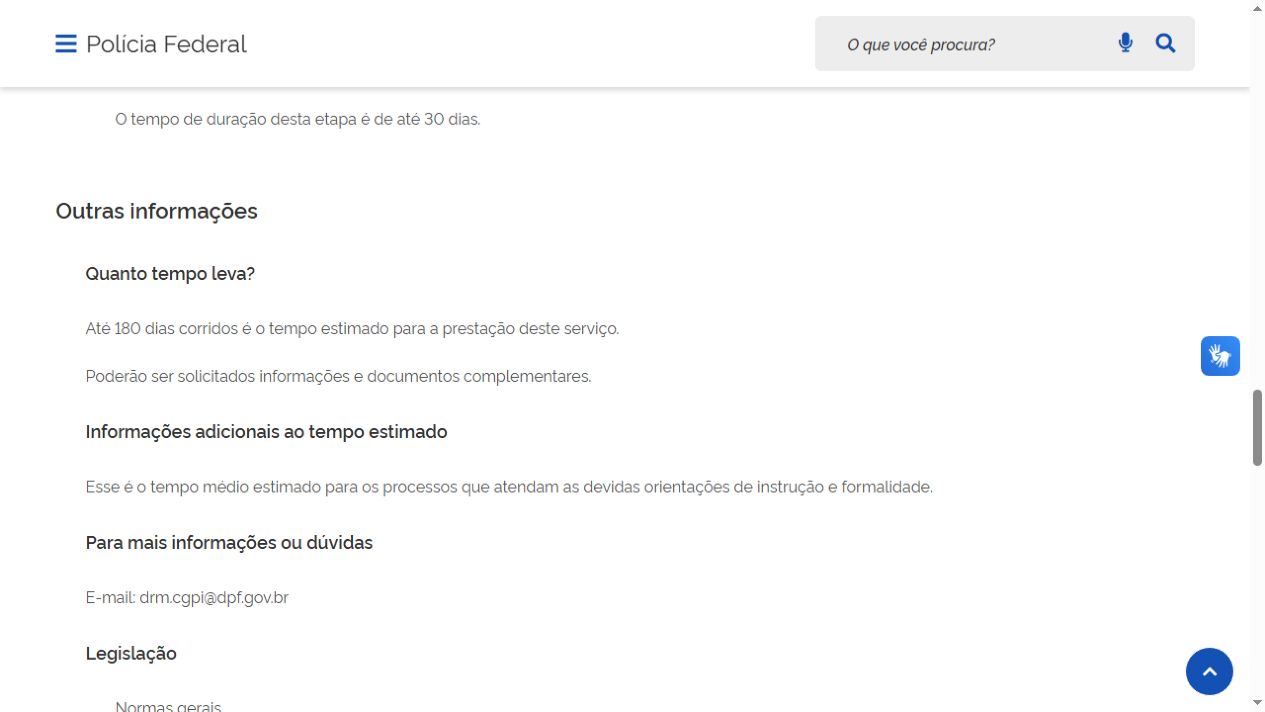
The service page says up to 180 calendar days, then calls this an average for applications filed with the required documents and formalities. See the official Polícia Federal page. This is an operating estimate, not an abstract statutory deadline.
What happens in practice?
Appointments are a major variable. One recent applicant searched for over a month, then found a slot three months away; others found earlier slots in quieter cities. This applicant discussion is not national statistics.
Another family-route report describes receiving an RNM number and the card about 30 days later. It was not a parent case, so it supports only the final stage. Read the account.
Practical conclusion: budget for 6-12 months from a ready file, not "30-45 days." Even a four-month appointment wait leaves ample room below two years.
The route, step by step
- The adult child obtains a qualifying residence permit in Brazil.
- The family checks whether VITEM XI through a consulate or a residence application in Brazil is the better route. An in-country application depends on status and entry circumstances.
- Prepare proof of relationship, passports, certificates and the sponsor's documents.
- File the application and book the Polícia Federal visit.
- After approval, complete registration and obtain the CRNM, Brazil's migrant card.
The official starting point is the Ministry of Justice Reunião Familiar section.
2. Mexico: parents are expressly included, but twenty days is not the whole process
Who can bring their parents?
Mexico's rules are helpful because they distinguish the sponsor's status:
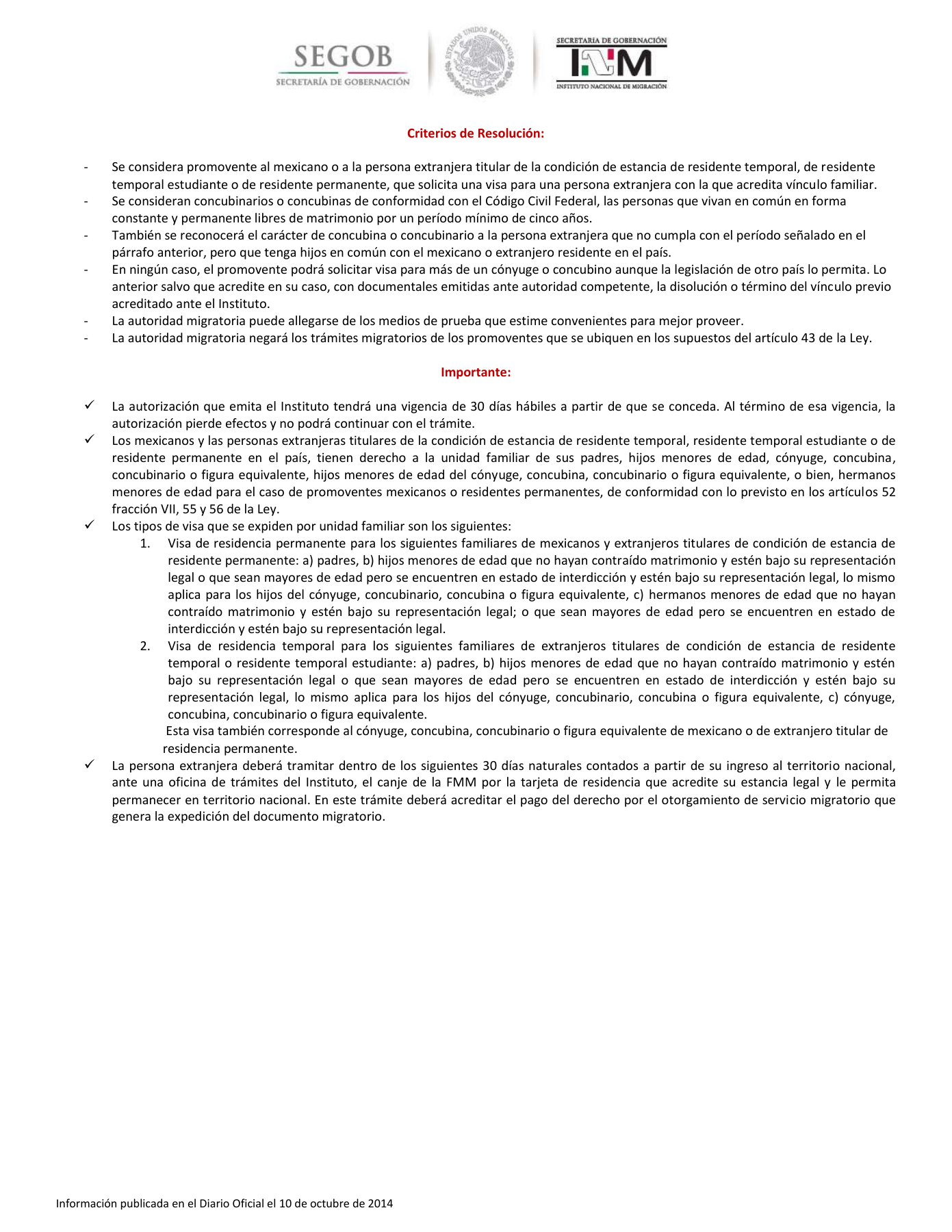
- parents of a Mexican citizen or permanent resident can obtain permanent residence;
- parents of a temporary resident or student temporary resident can obtain temporary residence.
The INM FAQ and official document confirm this. The list has no over-65 requirement.
Where do the 20 working days come from?
The procedure page states Tiempo de respuesta: 20 días hábiles, but this covers visa authorisation inside Mexico. The parent must still attend a consulate, enter Mexico and exchange the document for a card within 30 calendar days. See INM-03-013. So only one stage has a 20-working-day deadline.
What does practice show?
Experiences vary sharply by office and documents:
- in one case, a family procedure at the Polanco office took half a day and the card was issued the same day;
- another applicant waited 243 days, about eight months, for a change to temporary or permanent status;
- in a case involving the mother of Mexican citizens, the applicant reported 6-8 weeks until email approval and several more weeks before receiving the card.
These are user reports, not a sample: different timelines, 243 days and the mother's case. Their family grounds differ, so they show INM's range, not a parent-specific median.
Practical conclusion: plan for 3-12 months, not 20 working days. Eight months still fits below two years, but isolated cases cannot exclude exceptional delays.
The route, step by step
- The child with Mexican status requests a family unity visa through INM.
- The relationship is proved with the child's birth certificate. Check foreign documents for apostille, legalisation and translation requirements in advance.
- After approval, the parent books the named Mexican consulate. INM authorisation has limited validity, so do not delay.
- The parent receives the visa and enters Mexico.
- Within 30 calendar days of entry, exchange the document for a residence card.
Use the current INM page and the chosen consulate's website for the complete requirements. Appointment rules and document lists can differ by location.
3. Argentina: open to parents of temporary residents, but nationwide timing data is scarce
Who can bring their parents?
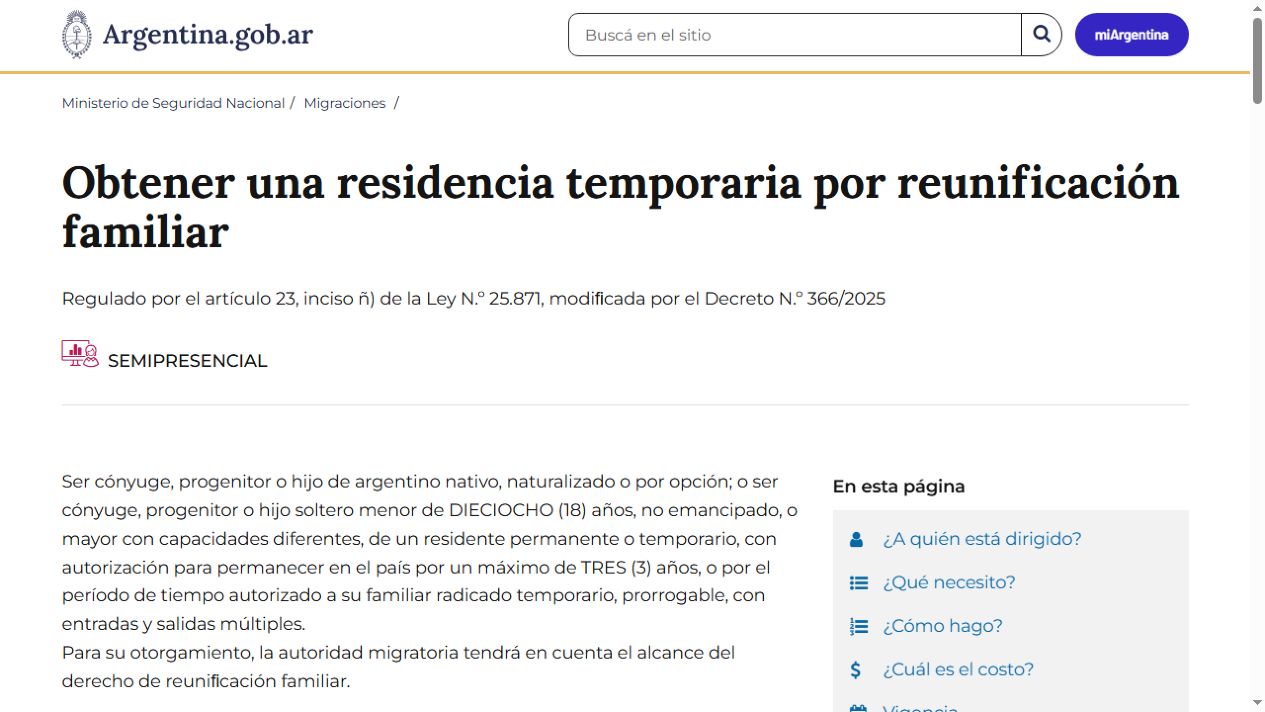
The current Dirección Nacional de Migraciones page includes parents of:
- Argentine citizens;
- permanent residents;
- temporary residents.
The child need not wait for citizenship or permanent status. A temporary resident's parent receives permission linked to the sponsor's term; family of an Argentine or permanent resident can receive up to three years. See the DNM page.
What do we know about timing?
RaDEX publishes no national decision time. The New York consulate says normal family visa processing takes 7-10 working days, or 30-45 days in some cases, and warns of seasonal variation. See its page updated on 30 December 2025.
A 2025 Buenos Aires Province guide estimates 5-6 months for DNI delivery after the process starts. This is regional, not nationwide. See the 148 service guide.
Practical conclusion: 3-9 months looks reasonable, but confidence is lower than for Brazil. I found no national parent-application statistics and did not substitute agency testimonials.
The route, step by step
- Check whether the parent can enter Argentina without obtaining a visa first. The parent's nationality affects the entry route.
- For a RaDEX application, the parent must be in Argentina after lawful entry.
- Upload the passport, proof of address, criminal record certificates and proof of relationship.
- Apostille or legalise foreign documents and translate them into Spanish through a sworn translator under Argentine rules.
- After review, the applicant receives an email with the date of the in-person visit.
The official guidance stresses that the procedure is personal and an intermediary is not required. Start with the DNM reunification page and the RaDEX guide.
Requirements compared: where is the real catch?
| Question | Brazil | Mexico | Argentina |
|---|---|---|---|
| Is the child's temporary residence enough? | Yes, with a qualifying type of permission | Yes, but the parent receives temporary residence | Yes |
| Must the child be a citizen? | No | No | No |
| Parent age threshold | None stated in the general parent list | None stated | None stated |
| Must the relationship be proved? | Yes | Yes | Yes |
| Can you safely promise under one year? | No, although the official average estimate is up to 180 days | No, office practice varies sharply | No, there are no national statistics |
| Main delay risk | Polícia Federal appointment and an incomplete file | The local INM office and consular appointment | RaDEX, document checks and DNI production |
"Parents are included in the law" is only the first filter. Bad documents, missing apostilles, inconsistent names and missed deadlines often matter more than age or quotas.
Seven documents to check before the move
The exact file depends on the country and nationality. Find these in advance:
- full birth certificates for the child, naming the parents;
- parents' passports with enough validity left;
- the child's citizenship or residence documents;
- marriage, divorce and name-change certificates where surnames differ;
- criminal record certificates for the required periods;
- proof of the sponsor's address and residence;
- maintenance and financial support documents if the chosen route requires them.
Check the chain of names. The child's passport, birth certificate and residence card must connect logically to the parents' documents. If transliterations differ, establish how to prove the change.
Do not leave apostilles and translations until last. Some offices accept only local sworn translators; some consulates set their own rules. Check before translating the whole family archive.
What a parent's residence permit does not solve automatically
Healthcare
Immigration status does not guarantee free healthcare. Check chronic-condition cover, medication, public-system waiting periods and private insurance at the parent's age.
Tax residence
Parents who spend most of the year there may become tax resident. Foreign pensions, rent, interest and investments need separate review.
Permanent status
A temporary family permit does not always become permanent automatically. In Mexico, the parent's status already depends on the child's status. In Brazil and Argentina, its duration may be linked to the sponsor's permission.
Travel while the case is pending
An application protocol may not replace a card at the border. Mexican and Brazilian applicants sometimes needed exit permission or waited for completion. If parents travel regularly, check this before filing.
Why Australia, Canada and Spain did not make the list
Australia fails the timing test. The current official estimate is 15 years for contributory parent visas and 33 years for Parent and Aged Parent visas. See the Department of Home Affairs.
Canada has the Parent and Grandparent Program, but permanent sponsorship depends on invitations and intake limits. A Super Visa allows long stays but is temporary and requires income and private health insurance. See IRCC's March 2026 briefing.
Spain gives an eligible first-stage application two months. But under the general route, a parent normally must be over 65, dependent and have a justified need to move, while the sponsor needs long-term residence. Eligibility can take longer than the visa decision. See the Ministry of Migration.
They are not "worse." They simply fail this test: move, then bring parents onto resident status without a multi-year queue.
How to check any other country in 30 minutes
Do not start with "does family reunification exist?" The answer will almost always be yes. Ask seven narrower questions:
- Are parents of an adult resident included, not just spouses and minor children?
- Is the child's temporary residence enough?
- Is there an age, disability or financial dependency test?
- Is there a quota, lottery or queue?
- Where is the timeline published, and which stage does it cover?
- Are there recent completed cases under the same legal route and at the relevant office?
- Does the parent receive a visitor visa, temporary residence or permanent residence?
If an adviser says only "30 days by law," ask for the path from ready file to card. Those 30 days may start after a six-month appointment wait.
Frequently asked questions
Is this really the world's top three?
No. They are three strong options that passed my parent-eligibility and under-two-year tests. No complete comparable dataset covers every country.
Is a result within two years guaranteed?
No. Extra documents, checks, unavailable appointments and individual complications happen. The evidence suggests months rather than decades.
Where is the evidence for actual rather than official timelines?
Brazil labels 180 days an average and has fresh appointment and CRNM reports. Mexico has the official 20-day stage plus cases from weeks to eight months. Argentina has one consulate's "normal averages" of 7-10/30-45 days and a regional 5-6 month DNI estimate. Argentina's evidence is weaker, and I say so plainly.
Can both parents move at the same time?
Both parents qualify, but each needs a file and decision. Check whether cases can be linked and appointments must be separate.
Do you need an immigration lawyer?
Standard cases can be self-filed. Advice helps with refusals, overstays, criminal records, complex family documents, inconsistent names or travel during processing.
My conclusion
Parent reunification does not have to mean a queue lasting the rest of their lives.
Brazil offers the clearest published average estimate. Mexico gives parents a status that follows the child's status, but real speed varies widely by office. Argentina opens the route even to parents of temporary residents, although national processing statistics are missing.
Australia's lesson is not "move to Latin America." It is that a visa's existence is not enough. Check who can sponsor parents, when that right begins and how long the whole route takes.
Checklist: ten boxes before a family move
- ☐ The child has, or will soon have, a status that permits parent sponsorship.
- ☐ You have checked the exact status the parents will receive.
- ☐ The quoted timeline runs to the card, not just one authority's decision.
- ☐ Appointment availability has been checked in the relevant city and consulate.
- ☐ Birth certificates connect the child to both parents.
- ☐ Every name change is supported by a document.
- ☐ You know where apostilles, legalisation and translations must be completed.
- ☐ Travel while the case is pending has been addressed.
- ☐ Healthcare, insurance and taxes have been checked separately.
- ☐ The financial plan includes at least several months of delay.
This article is not individual legal advice. Immigration rules, fees and office practice change. Before filing, check the current requirements for the parents' nationality and the place of application.
Sources
- Australia: official queues and the 15/33-year estimates.
- The Guardian: 1,536 applicants died waiting, with family stories.
- Brazil: residence authorisation and the average estimate of up to 180 days.
- Brazil: Federal Police family FAQ.
- Brazil: Order No. 12/2018 on family reunification.
- Mexico: INM-03-013 and the 20-working-day stage.
- Mexico: family unity visa FAQ and parent categories.
- Mexico: INM PDF showing types of residence for parents.
- Argentina: temporary family reunification residence through RaDEX.
- Argentina: RaDEX guide.
- Argentina: consular estimate of 7-10 or 30-45 working days.
- Spain: requirements for reuniting with parents.
- Canada: Parent and Grandparent Program and Super Visa.